Parents don’t rent inflatable play structures to fill a few minutes. They need something that can keep a dozen energy-packed kids busy for the length of a backyard party, or carry a school fun fair through an afternoon without meltdowns. Done right, bounce house rentals and inflatable slide rentals do exactly that. They create a safe, high-energy zone where kids self-organize into games, burn off excitement, and cycle back for more. After years of planning community events and advising families on party rentals, I’ve learned which inflatable play structures deliver staying power, which setups avoid bottlenecks, and how to match equipment to the crowd you actually have, not the one on the invitation.
The Staying Power of Inflatable Play
What keeps kids engaged for hours is not just height or flash, but a loop of novelty and mastery. Inflatable bounce houses offer simple movement with low learning curve. Slides add a dose of speed and anticipation. Obstacle courses reward repetition, where kids try to beat their own time. Water features reset interest when the sun and the party start to sag. When you mix these elements, children rotate naturally between stations without adult prompting.
There’s also an overlooked factor: throughput. You want structures that move kids in, engage them quickly, and clear them for the next round, without long lines flattening the mood. A well-chosen combination of inflatable party equipment handles flow gracefully so the event hums instead of stalls.
Matching the Structure to the Event
Every event has constraints. A small backyard with mixed ages calls for compact, durable options. A neighborhood block party needs high-capacity choices with fast turnarounds. At a birthday with twenty five children and two adults in charge, simplicity beats spectacle.
For backyard party rentals, I lean toward a combo bounce house rental with a slide attached. A combo unit offers open jumping, a climbing wall, and a short slide within one footprint, and it keeps kids looping. That single-piece efficiency matters if you want to minimize power circuits and supervisor coverage. If you have more space and a larger guest list, add a standalone inflatable slide to thin the line at the combo.
For school or church events that run several hours, think in zones. One zone for little ones with a toddler bounce house and soft obstacles. One for grade schoolers, usually a mid-height slide and a moderate obstacle course. And one “challenge” zone, often a longer obstacle track that attracts older kids and early teens. That spread gives everyone a sense of territory and reduces collisions between big and small jumpers.
Bounce Houses: The Workhorses of Kids Party Rentals
Not every bounce house feels the same once the blower kicks in. The internal baffle design affects bounce springiness. Higher-quality inflatable bounce houses have firmer floors that return energy better, which kids notice. Standard-sized units average around 13x13 feet of internal space, big enough for 6 to 8 kids under 10, if weight limits and age group are consistent. Larger 15x15 models handle more capacity, but you need to be stricter about who enters together.
Theme helps, but layout matters more. Windows on three sides improve visibility and airflow. A safety step at the entrance is non-negotiable for younger kids. I avoid units with narrow doorways at events with lots of toddlers, since bottlenecks lead to pushing.
Moonwalk rentals remain popular for a reason: jump, fall, laugh, repeat. If you’re planning a weekend bounce house rental, check whether your provider allows overnight or multi-day pricing. Many inflatable rentals companies offer Friday drop-off and Sunday pickup for a small premium, which can be worth it if you want a relaxed setup schedule and a family playday after the party.
Slides and Water Slides: The Engagement Multiplier
The fastest way to tamp down a line at the bounce house is to set up an inflatable slide nearby. Kids crave the climb-slide cycle, and it moves people through quickly. Dry slides work for most of the year, but water slides turn a warm afternoon into a magnet.
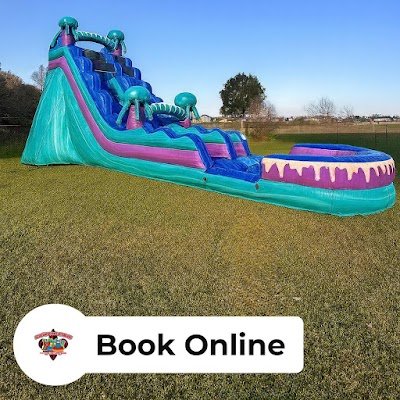
Height is not everything. A 14 foot slide with a reliable climb lane and a safe, well-baffled landing often outperforms a taller, fussier model at events with younger kids. On water units, look for overhead sprayers that evenly wet the surface, and a landing pool with clear depth markings. Safety rules should be specific: feet first only, one at a time on the slide, exit immediately. A trained attendant can keep the flow smooth without sounding like a referee.
If you’re considering bounce house and water slide rentals as a pair, ask about circuit requirements. A standard 1.5 horsepower blower draws about 8 to 10 amps, and a water slide blower may be similar. A backyard on one old circuit can trip if you add a cotton candy machine and a speaker system. The fix is modest: separate the blowers across circuits and keep extension cords short, ideally 50 feet or less, with 12-gauge for longer runs.
Combo Units: The One-Structure Solution
Combos are the Swiss Army knives of party inflatables. They stitch together a bounce area, a small climbing wall, and a slide, sometimes with basketball hoops or pop-up obstacles inside. For a birthday with children ranging from three to nine, a dry combo keeps everyone engaged without complex rules. The line advances quickly, and kids naturally loop: bounce, climb, slide, re-enter.
Wet/dry combos boost engagement in warm weather. With a garden hose and a GFCI outlet, you get water play without committing to a huge slide. The water drains off easily, though you should expect a muddy patch near the exit. Plan exit mats or a “towel zone” to keep your patio safe.
Capacity on combos tends to mirror standard bounce houses. If you anticipate more than a dozen kids rotating through, adding a second attraction is wise to avoid congestion.
Obstacle Courses: The Crowd-Pleasers with Built-In Flow
Obstacle courses thrive at events with mixed ages and larger turnouts. Their throughput is excellent, because two kids enter together, race through challenges, and exit, clearing space for the next pair. Even kids who shy away from tall slides like the quick succession of tunnels and pop-ups.
Length varies widely. Shorter courses fit in tighter yards, while longer ones need room and possibly multiple blowers. If the course ends with a slide, make sure the exit area is wide enough for kids to clear quickly. At school carnivals, I’ve seen two volunteers manage a long course effectively by standing at entrance and exit, encouraging speedy starts and fast exits without hard policing.
Toddler Zones: Calm, Safe, and Surprisingly Busy
Parents of two and three year olds want engagement that does not feel like taking a risk. A dedicated toddler bounce house solves this. These units are lower to the ground, with soft obstacles and open sides for easy supervision. The key advantage is control: older kids should not be allowed inside, which prevents accidental collisions and parent stress.
Toddlers don’t need height to have a great time. They need easy entrances, gentle slopes, and clear boundaries. Set toddler zones upwind of water slides and games with balls, so nothing heavy drifts into their space. Stock the area with a few chairs for parents and a shade canopy. You’ll be shocked how long this quiet, safe corner stays occupied.
Creating a Layout That Works for Hours
An effective layout is half the battle. Place high-throughput attractions like slides and obstacle courses away from pinch points such as gates and patios. Keep the entrance of a bounce house facing the main crowd area, not a fence, so the supervising adult can keep eyes on it without standing in the way.
Water slides need a clear path to the hose and a plan for runoff. Don’t aim a pool exit toward sloped lawn where water can slick a walkway. Bounce houses prefer flat ground, short power runs, and clearance overhead. A general rule I use: about five feet of space around each side, eight feet overhead, and easy access for the delivery team.
I also separate zones by energy level. Place the toddler bounce house on one side, a combo or standard bounce in the middle, and slides or the obstacle course farther out. That natural gradient reduces collisions and helps older kids drift to attractions that challenge them.
Safety That Fades Into the Background
Safe setup and supervision allow play to feel free rather than inhibited. Choose children’s party equipment from vendors who anchor properly with stakes or heavy sandbags and who clean units between rentals. A quick glance test: seams should look tight, netting intact, and the blower secured with tied straps, not a loose knot.
Post and enforce age and capacity limits. On a 13x13 bounce house, I’m comfortable with six to eight children under age 10, fewer if older kids enter. Mixed ages are where most bumps happen. If you cannot group by size, step up supervision and keep jump times shorter.
Weather matters. Wind is the non-negotiable hazard for inflatables. Reputable party rentals operators pause setups if sustained wind approaches 15 to 20 mph, depending on the unit and manufacturer guidance. Light rain is less of a problem than people assume, but slippery surfaces change the rules, especially on slides. A good vendor will provide straightforward thresholds and train attendants accordingly.
Practical Details That Save the Day
Plan for power. Each blower wants a dedicated circuit if possible. Avoid daisy-chaining two blowers on one long household extension cord. Ground fault protection is essential, especially around water.
Schedule deliveries with buffer time. For a Saturday party starting at noon, a morning delivery around 9 gives room for adjustments. If you choose a weekend bounce house rental, confirm pickup windows so you are not stuck waiting late Sunday.
Ground prep pays off. Mow the grass a day or two prior, check for sprinkler heads, and clear pet waste. If you have decorative gravel or pavers, ask for tarp protection under the inflatable. For concrete or asphalt, confirm that the vendor brings adequate sandbags.
You’ll also want a simple traffic plan. One adult by the entrance calling in manageable groups, another near the exit encouraging quick clears. Without sounding strict, a steady rhythm keeps the play continuous and the line short.
Choosing the Right Vendor for Inflatable Rentals
Good equipment is only half the equation. The vendor’s professionalism determines whether your event feels effortless or demanding. Ask about insurance and permits if your party is in a public park. Request a copy of safety guidelines, manufacturer capacity limits, and cleaning procedures. I prefer vendors who explain their anchoring methods and who bring backup blowers for large events.
Experience shows in the questions they ask you. If they want to know about access gates, slope, power availability, and layout, you’re likely in good hands. If they just say “it’ll fit,” push for details. Inflatable rentals should feel routine for the provider, with plans for weather, power, and ground conditions already in place.
When to Add More Than One Attraction
The temptation is to book the biggest inflatable you can afford. Sometimes that works. More often, two mid-sized attractions outperform one giant structure in keeping a crowd engaged for hours. A single huge water slide draws a magnetic line that barely moves, while a pair of balanced units distributes the fun. If you expect 20 to 30 kids, a combo plus a slide or a combo plus a short obstacle course spreads the load better than an oversized showpiece.
Think of the younger sibling problem. In mixed-age parties, the toddler bounce house is not a luxury. It’s what keeps parents of tiny guests from leaving early. That single piece of children’s party equipment can extend your event by an hour or more because families won’t feel rushed or anxious.
Indoor Setups and Cold-Weather Options
Inflatables don’t belong exclusively to sunny backyards. Gymnasiums and community centers host fantastic winter events with dry slides, obstacle courses, and standard bouncy house rental units. Indoor setups require careful attention to power, ceiling height, and floor protection. Ask about non-marking tarps and weights instead of stakes. Ventilation helps, because enclosed spaces warm quickly with blowers running.
For colder seasons, dry units shine. Kids run warm, and the play stays engaging without water. Combine a bounce unit with a carnival-style game station and a snack table to create a flow that keeps kids circulating. Families appreciate a comfortable space where coats go on and off without a mess.
Budgeting Without Compromising Fun
Event rentals for kids have a wide range of pricing based on region, quality, duration, and demand. A standard bounce house may run in the low hundreds for a day, with combos and slides increasing from there. Multi-day or weekend bounce house rental packages add affordable bouncy obstacle course value if you want a relaxed schedule or a second day of family use.
One good tactic is to bundle. Many party rentals providers offer package pricing for two units or for a bounce house and water slide rentals combination. Ask whether the package includes delivery, setup, and pickup, and nail down any extra fees for stairs, long carries, or park permits.
If the budget is tight, prioritize capacity and flow over flashy themes. A well-designed, clean, sturdy unit without a licensed character still draws kids for hours. Pair it with a simple DIY station like bubble wands or sidewalk chalk to create micro-breaks that do not compete with the main attraction.
Hygiene and Maintenance: What You Should Expect
Parents notice when an inflatable smells like detergent and looks cared for. That matters. Reputable providers clean and sanitize between uses, replace worn netting, patch seams professionally, and retire units that do not meet standards. If you are screening vendors, ask how often they deep clean and how they handle sanitation during high season.
Shoes off is standard. Remind kids to remove glasses and sharp objects. Keep food and face paints away from the entrances. A small shoe mat and a folding table near the line help maintain order and cleanliness with very little effort.
A Few Real-World Scenarios
A fifth birthday in a modest backyard with mixed ages up to eight: a wet/dry combo is the hero here. Late May sun makes water play a draw. The bounce area lets cautious kids warm up, and the slide delivers a thrill. One adult handles the entrance, another manages towels. The line stays short, parents can chat, and the birthday child gets to play rather than waiting.
A school fall festival on the field with two hundred students rotating through: skip the massive slide. Bring a medium obstacle course, a standard bounce house, and a mid-height dry slide. Put them in a triangle with wide lanes between. Four volunteers keep the flow moving. Each child gets multiple turns, and the sound you hear is laughter rather than complaints about lines.
A family reunion with a spread of toddlers to teens: build zones. A toddler bounce house close to the picnic tables for easy supervision. Farther out, a combo for the 5 to 10 crowd. Add a separate higher slide for older kids. Teens will still try the slide, then gravitate to lawn games. You avoid size-mismatch collisions and keep the youngest safe.
How to Keep the Fun Rolling for Hours
Lines sap energy. Throughput fixes it. Two entry points or two attractions beat one large monument. Rotate age groups every few minutes during peak times if you need to mix ages safely. Music helps keep the tempo light, and quick, upbeat songs encourage movement without shouting.
Short, clear rules posted in view reduce nagging. Keep a water station nearby. Sunshade, even a simple canopy, makes a bigger difference than most hosts expect. Fatigue is the natural enemy of long play, so build in micro-rests: popsicle breaks, a quick photo moment, then back to the inflatables.
Booking Tips That Make You Look Like a Pro
- Ask about insurance, setup methods, and cleaning. Choose vendors who answer quickly and specifically. Share real details: yard measurements, power access, and obstacles. Photos help the vendor prepare. Reserve early for peak weekends, especially if you want specific birthday party inflatables or themed units. Confirm the weather policy and wind thresholds, not just rain plans. Put one adult in charge of each attraction during the busiest hour to keep lines moving and rules consistent.
When to Upsize, When to Simplify
If most guests are eight to eleven, a taller slide or a longer obstacle course earns its keep. For three to five year olds, resist going big. They’ll spend more time in a friendly toddler bounce house or a low-height combo than staring at an intimidating tower. If your party has fewer than a dozen kids, one well-chosen combo plus a few simple yard games often beats an overstuffed lineup.
Complexity also adds failure points. Multiple water inflatables mean more hoses, more mud, and more supervision. If you have limited adult help, keep the attraction count manageable and rely on designs that create their own engagement loop.
The Role of Themed Units
Themes are fun and can set the tone for a birthday. Unicorn castles, pirate ships, jungle adventures, and sports arenas all exist in inflatable form. Just do not let theme override functional layout. A themed bounce house that is poorly ventilated or narrow at the entrance will frustrate parents and kids equally. Choose the right structure first, then see what themes are available in that form factor.
Beyond the Backyard: Parks and Public Spaces
Backyard party rentals are convenient, but many families prefer parks for space. Public spaces come with extra steps: permits, proof of insurance, and sometimes site-specific rules about staking into the ground. Parks often forbid stakes to protect irrigation lines, so your vendor must bring heavy sandbags. Bring extra extension cords if the power source is distant, and confirm the amperage of outlets at the shelter. If power is unreliable, consider a generator rated to handle your blowers with headroom.
Plan for loading and unloading access. A sixty-foot carry across grass is tougher than it sounds when rolling a 300 pound inflatable. Good communication with the vendor avoids surprises.
What Makes Hours Fly For Kids
A day that breezes by for children includes choice, movement, and low friction. Inflatable play structures excel when kids can choose between bouncing, sliding, and racing, and when each activity has a clear path in and out. Add water on hot days for a full reset. Keep ages grouped as much as practical, and provide a predictable rhythm.
Bounce house rentals are not just placeholders in a party plan. They are the plan, if you treat them that way. Combine a structure that fits your space with a layout that respects flow. Balance features with supervision. Pay attention to power, anchoring, and wind. Then step back and let the kids turn air and fabric into their own world for hours.
Quick Reference: Picking the Right Setup
- For small backyards with mixed ages: choose a combo bounce house rental, ideally wet/dry, and clear 15 by 25 feet of flat space. For larger crowds and school events: pair an obstacle course with a mid-height slide and a standard bounce unit to maximize throughput. For toddlers: reserve a dedicated toddler bounce house, separate by space and rules to prevent collisions. For hot weather: water slides or wet combos boost engagement, but plan for runoff and towels. For budget and convenience: ask about packages on party inflatables, verify weekend bounce house rental options, and confirm delivery and pickup windows.
Done right, inflatable play structures anchor a day that feels effortless for hosts and endless for kids. If you focus on flow, safety, and variety, you’ll have a line of happy jumpers right up to the last minute, and parents asking which vendor you used before they even walk back to the car.